

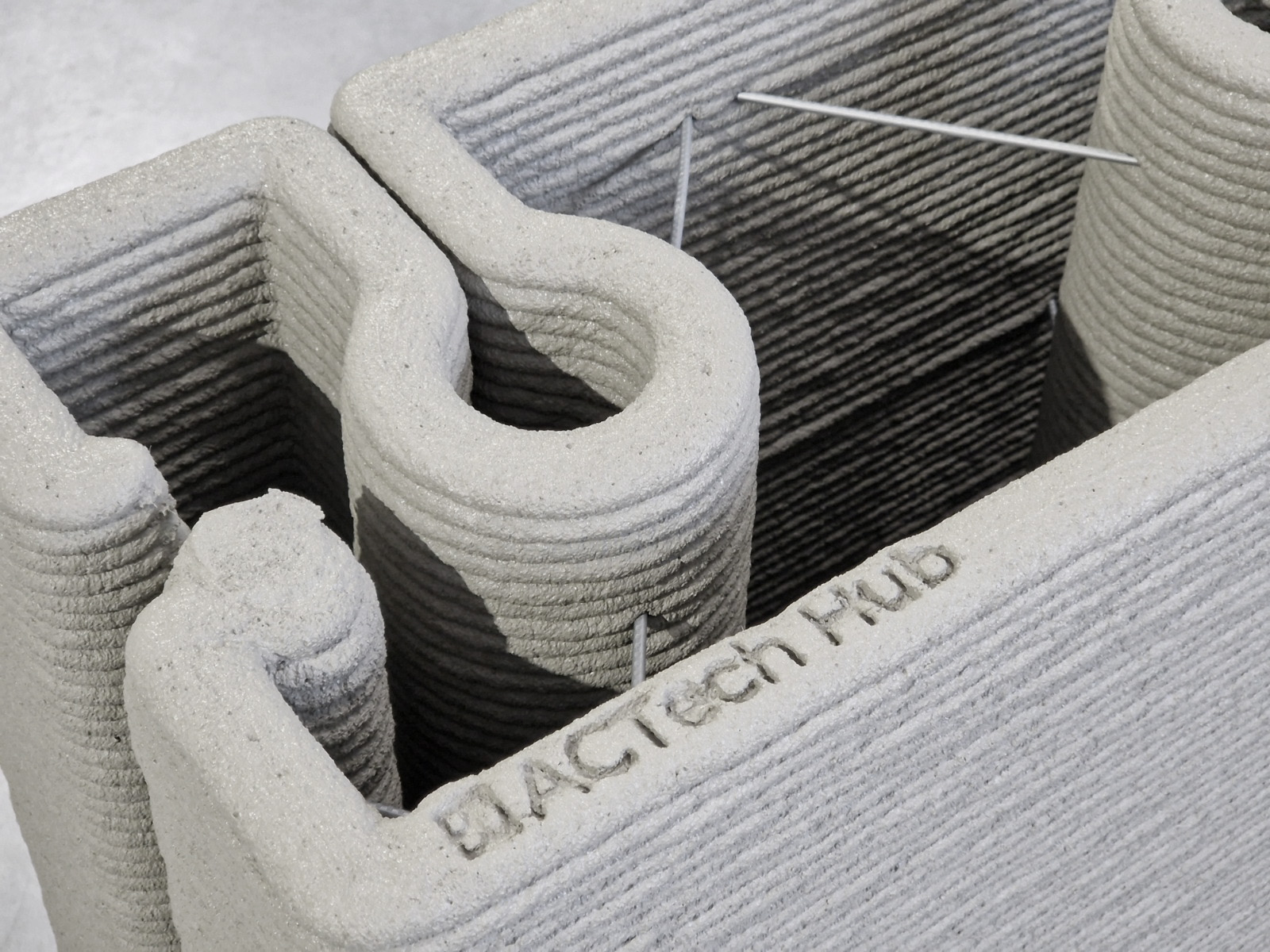
[Dis]Assembled Architecture: Towards Circular Construction Through Robotic Fabrication
The construction industry remains one of the most resource-intensive sectors, necessitating research into Robotic Fabrication (RF) to reduce its carbon footprint. Due to a diminishing workforce, the industry must turn to automation. RF enables innovative solutions, flexibility of design and increased work-site safety. Environmental concerns dictate that automated disassemblage should be considered to reduce material and energy use. However, human interaction should also be considered. Therefore, this proposal investigates RF processes, integrating Computational Design and Design for Disassembly workflows to develop viable construction systems. Collaboration with the institutional partner Lab2PT and the industry partner Casais will enable effective translation of research outcomes from the laboratory to practical applications on construction sites, enhancing the project’s real-world relevance and implementation potential. By merging digital workflows with robotic production, the research aims to demonstrate scalable solutions aligned with sustainability goals and contribute to a paradigm shift toward resource-efficient, adaptable construction practices.
The objective of this project is to leverage current knowledge in materials and robotic fabrication to propose sustainable, customizable and disassemblable hybrid systems for modular construction. To accomplish this objective, it is also necessary to address issues of integration of the design-to-fabrication workflows within end-users’ designs and expectations. These systems are to be tested and categorized by viability, and further development is to be made on the ones most suitable for mass customization and industrial production, respecting sustainability. For that, it is necessary to reach key goals:
1. Investigation and cross reference of possible hybrid systems through physical and digital prototyping and testing, in which new products (materials, processes, hardware and software) can be created and optimized, purposely addressing gaps in the industry, aimed towards replicable solutions for mass customized, low waste, disassemblable structures.
2. Development of designed-for-production computational solutions to rapidly respond to challenges in construction regarding labor shortages, housing costs, material and energy usage, time-to-market, and comfort, capable of automatic generation of detailed documents, life-cycle assessment, structural performance, timeline and costs analysis, and fabrication workflow.
3. Dissemination of the acquired knowledge among students and the industry partner, fostering the development of future professionals and advancing innovation in environmentally responsible architectural practice, reflecting upon the impact of new robotic construction processes as vessels for novel creative representation on contemporary architecture.
PHD CANDIDATE
Rodrigo Chiesse
SUPERVISORS
Filipe Brandão, Bruno Figueiredo & Pedro Andrade (tutor on company)
YEAR
2026-2029
link
Date:
26/01/2026


